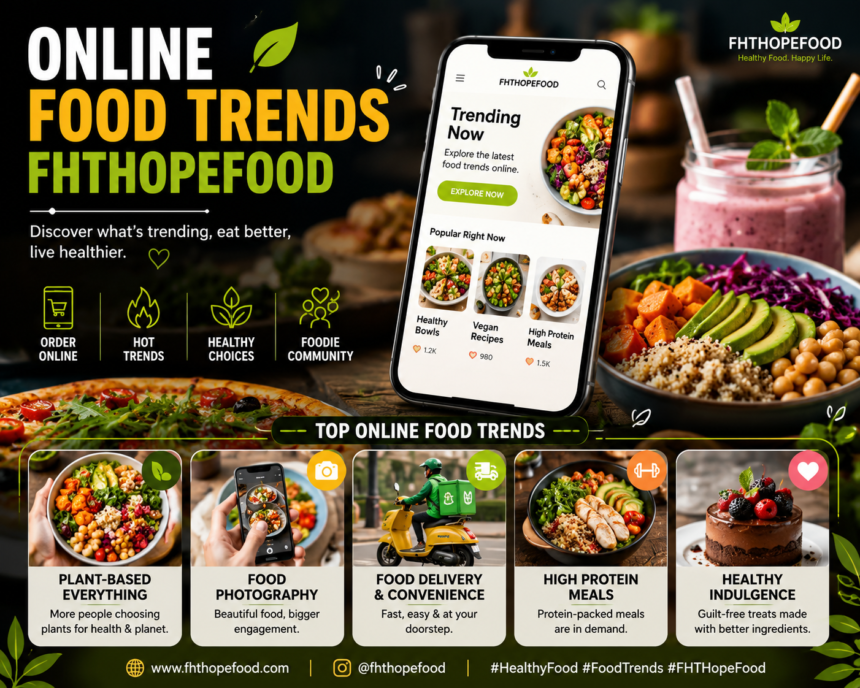
Introduction: How Food Went From Kitchens to Screens
Food used to be something you discovered in restaurants, family kitchens, or street markets. Today, it is just as likely to appear first on a phone screen before it ever reaches a plate.
Short videos, reels, and food blogs have completely changed how people decide what to eat. A simple 30-second clip can turn a normal dish into a global trend overnight. This shift is what we now call modern online food trends.
Within this space, the phrase “online food trends fhthopefood” appears as a niche keyword that reflects how digital food culture is evolving. It represents the mix of viral food behavior, online communities, and emerging content identities that shape what people cook, share, and consume online.
What “Online Food Trends Fhthopefood” Really Means
The keyword online food trends fhthopefood can be broken into two parts.
First, “online food trends” refers to viral food movements spreading through platforms like TikTok, Instagram, and YouTube. These include recipes, cooking hacks, aesthetic meals, and diet-based trends.
Second, “fhthopefood” appears to function like a digital tag or content identity. While it is not a widely recognized global brand, it fits the pattern of many online food pages or creators who build small but active communities around food content.
Together, the phrase represents how modern food culture is not only about eating—it is about content, identity, and online engagement.
The Rise of Digital Food Culture
Food content has become one of the most powerful categories on the internet. Social media platforms have made cooking more visual, fast, and interactive.
TikTok is known for turning simple recipes into viral sensations. Instagram focuses on aesthetic presentation—colorful bowls, clean plating, and visually pleasing meals. YouTube provides longer tutorials for users who want detailed cooking guidance.
This ecosystem has created a new kind of food culture where trends are born not in kitchens, but in feeds.
The keyword online food trends fhthopefood fits into this world as part of how users search, tag, and categorize food content online.
| Field | Detail |
|---|---|
| Topic | Online Food Trends Fhthopefood |
| Focus | Digital food culture and viral eating habits |
| Main Idea | How social media is shaping modern food trends |
| Keyword Used | online food trends fhthopefood |
| Platforms | TikTok, Instagram, YouTube |
| Content Type | Informative blog article |
| Audience | Food lovers, bloggers, social media users |
| Trend Type | Viral recipes, health foods, aesthetic meals |
| Key Insight | Food trends now spread faster online than offline |
| Fhthopefood Meaning | Likely a niche tag or small digital food identity |
| Purpose | Explain modern online food behavior |
| Style | Simple, human-written, informative tone |
| Update Angle | Future of AI-driven food trends and digital cooking culture |
How Viral Recipes Spread So Fast
One of the most interesting parts of online food culture is speed.
A recipe can go from a single creator’s post to millions of recreations in just a few days. This happens because:
- Algorithms promote engaging content
- Users quickly recreate and repost trends
- Food content is highly shareable
- Visual appeal drives attention instantly
Examples include simple recipes like baked feta pasta, tortilla wraps, and whipped coffee trends that dominated social platforms globally.
This viral nature is a key reason why online food trends fhthopefood and similar keywords emerge—they help categorize rapidly spreading digital food ideas.
Types of Online Food Trends Today
Modern food trends are diverse and constantly evolving. Some of the most common types include:
Viral Comfort Foods
These are easy recipes that feel satisfying and simple. Pasta dishes, baked snacks, and quick rice meals often fall into this category.
Health-Focused Trends
High-protein meals, low-sugar desserts, and calorie-controlled dishes are widely shared among fitness communities.
Aesthetic Food Trends
These focus more on appearance than complexity. Smoothie bowls, colorful salads, and artistic plating dominate this space.
Budget Cooking Trends
Students and working individuals often follow cheap, easy-to-make recipes that save time and money.
Experimental Fusion Foods
This includes mixing cuisines—like combining Asian flavors with Western fast food styles.
All these categories influence how people interact with terms like online food trends fhthopefood, especially when exploring niche food content online.
Role of Social Media Platforms in Food Trends
Social media is the backbone of modern food discovery.
TikTok uses short videos that encourage fast engagement. Instagram highlights visual storytelling through reels and photos. YouTube provides deeper cooking education and recipe breakdowns.
Hashtags also play a major role. They help categorize content and allow users to find specific food communities.
Even emerging tags like fhthopefood can act as identifiers for smaller food groups or content pages, contributing to micro-trends within larger food movements.
Why People Follow Online Food Trends
There are several reasons why online food trends have become so popular:
First, they are easy to understand. A short video can teach a recipe in seconds.
Second, they feel entertaining. Cooking is no longer just a task—it is content.
Third, people enjoy trying global foods at home without traveling.
Fourth, it creates a sense of participation. Users don’t just watch trends; they recreate them.
Finally, it is cost-effective. Many viral recipes use simple ingredients that are already available in most kitchens.
This behavior explains why search terms like online food trends fhthopefood continue to appear in digital spaces.
How These Trends Affect Daily Life
Online food trends are not just online entertainment—they influence real life.
People now plan meals based on what they see online. Grocery shopping habits are also changing, with users buying ingredients specifically for viral recipes.
Restaurants sometimes adjust their menus based on trending dishes. Even food delivery platforms benefit from viral items becoming popular.
At the same time, awareness around health and nutrition has also increased because of online discussions.
However, not all trends are positive. Some recipes lack nutritional balance or exaggerate results, which can mislead viewers.
Challenges Behind Viral Food Content
While online food trends are exciting, they also come with challenges.
One major issue is misinformation. Not every viral recipe is tested or reliable.
Another challenge is unrealistic expectations. Some food content is designed for visuals rather than real-life cooking.
Trend overload is also common. A recipe becomes popular quickly and disappears just as fast, creating constant pressure to keep up.
Lastly, there is sometimes confusion around niche keywords like online food trends fhthopefood, where users may not always understand the origin or purpose of the term.
Is Fhthopefood a Brand or a Trend Tag?
The term “fhthopefood” does not currently appear as a widely established global food brand. Instead, it likely represents a smaller digital identity—such as a page, content tag, or emerging creator name.
In today’s digital environment, many food trends start from small accounts before becoming viral. Even a single creator can influence thousands of people if their content connects emotionally or visually.
This is why terms like online food trends fhthopefood are important—they show how niche identities can exist within larger global food culture.
The Future of Online Food Trends
The future of food content is expected to become even more digital and personalized.
Artificial intelligence may soon suggest recipes based on user behavior. Augmented reality could allow users to visualize meals before cooking them. Live cooking streams will likely become more interactive.
We will also see more micro-communities built around specific food tags and identities, similar to how fhthopefood fits into niche online naming patterns.
Food content will continue to evolve from simple recipes into full digital experiences.
Conclusion: A Changing Food World
Online food culture has completely reshaped how people think about cooking and eating. What used to be a personal activity is now a global digital experience.
The keyword online food trends fhthopefood reflects this transformation. It represents not just food trends, but also the way digital identities, hashtags, and communities form around what we eat.
As technology continues to grow, food will become even more connected to online platforms, making trends faster, more creative, and more influential than ever before.
FAQs
What is online food trends fhthopefood?
It refers to a combination of viral online food trends and a niche digital tag or content identity used in food-related social media discussions.
Why do food trends go viral online?
Because they are visually appealing, easy to share, and promoted by social media algorithms that boost engaging content.
Is fhthopefood a real food brand?
It does not appear to be a major global brand, but it may represent a smaller content page or online food identity.
Are viral food trends healthy?
Some are healthy, especially fitness-based trends, but others focus more on visuals and may not always be nutritionally balanced.
How do I find new food trends online?
You can explore platforms like TikTok, Instagram Reels, YouTube Shorts, and search using trending food hashtags.